

Orthopaedic Mattresses Explained: Are They Worth It?
In this article
Search for a new mattress and you'll see the word "orthopaedic" everywhere. It sounds clinical and reassuring. But what does it actually mean, and is one right for you?
What "orthopaedic" means on a mattress
In the shops, an orthopaedic mattress is one designed to give firm, even support, especially to your back and joints. As far as we're aware there's no official standard behind the word, so different brands use it in different ways. In practice it usually points to a firmer feel and a supportive build, not a medical device.
So treat it as a description of a style of mattress, not a promise that it will treat anything. Always check the product page for the actual firmness and how it's made.
Why people go for them
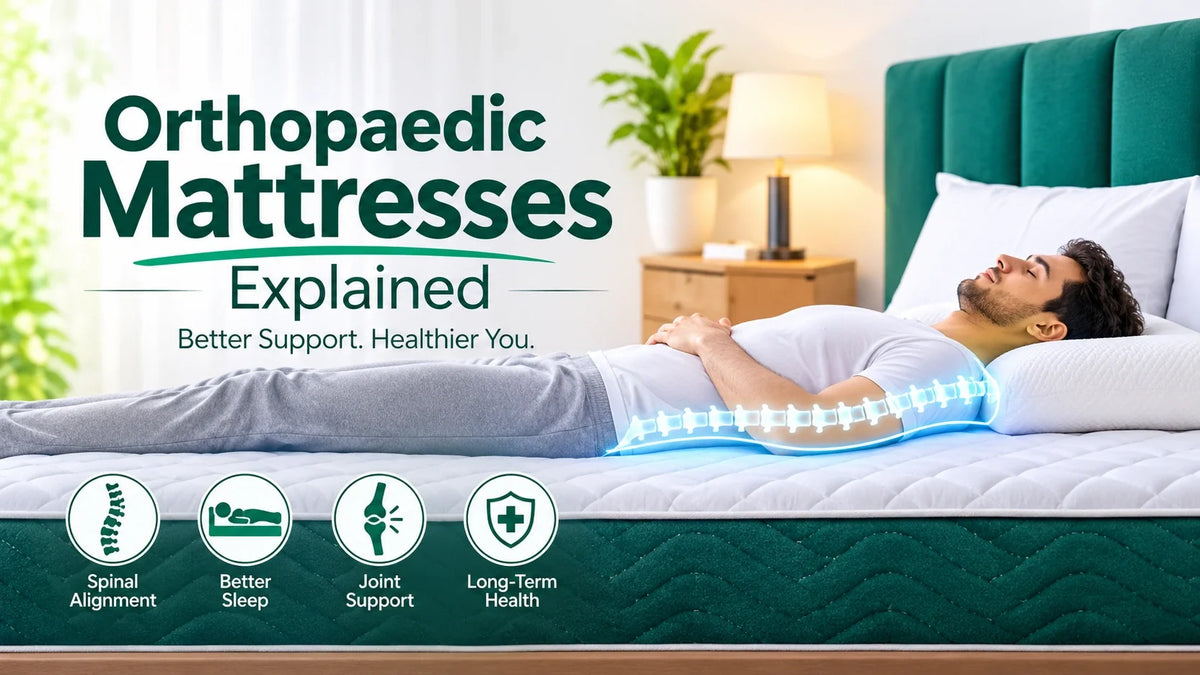
Mostly it comes down to support. People want a bed that keeps the spine in a neutral position instead of letting the hips sink too far. Some like a stable surface that's easy to get in and out of. Others just like a firm bed. How any mattress performs for you depends on your body, how you sleep and what you prefer.
Who they might suit
Back sleepers often like medium-firm to firm. Stomach sleepers usually need something firm so the hips stay in line. Heavier sleepers may need extra support so the mattress doesn't sag. And plenty of people simply prefer a firm bed with no medical reason at all.
Who might want something softer
Side sleepers, lighter sleepers and anyone who likes cushioning at the shoulders and hips can find a very firm mattress uncomfortable. If that sounds like you, look at a medium feel, or a firm mattress with a softer layer on top.
Is firmer always better for back pain?
No. A mattress that's too hard creates pressure points, and one that's too soft lets the spine sag. For many people medium-firm is the sweet spot. Back pain has plenty of possible causes, so if yours keeps coming back, see your GP or a physiotherapist. A mattress can't stand in for proper medical advice.
What to check before you buy
Look for a clear description of the firmness, not just the word "orthopaedic". Find out what it's made of and how the support layers are arranged. Pick a size with room to move (our [link: guide to choosing a mattress] has the standard UK sizes). Read the returns and guarantee terms. And if you can, lie on it in your normal sleeping position. The Falkirk showroom is the easiest way to do that if you're nearby.
You can browse our [link: orthopaedic mattresses] or the [link: Royal Alpha range] to compare options.
Looking after one
Rotate or turn it as the maker recommends, use a mattress protector, keep it on a sound, well-supported base, and try not to sit on the same edge every day. It all helps it hold its shape for longer.
So, are they worth it?
They can be, if you want a firm, supportive bed. But the label alone doesn't tell you whether one's right for you, so look at the real firmness, the construction and how it feels when you lie on it. If you'd like help narrowing it down, our [link: mattress quiz] is a good starting point.
Frequently asked questions
Is an orthopaedic mattress good for back pain?
Not necessarily. A supportive mattress can make you more comfortable, but back pain has lots of possible causes. If yours is ongoing, see your GP or a physiotherapist.
Are orthopaedic mattresses very hard?
They're usually firmer than average, but "orthopaedic" isn't a firmness rating on its own. Check the product description for the actual feel, because it varies between brands.
Do I need a doctor's recommendation to buy one?
No. It's an everyday style of mattress, not a medical device, so you can choose one for comfort and support like any other.
Can side sleepers use an orthopaedic mattress?
Some do, but a very firm surface can feel uncomfortable at the shoulders and hips. If you sleep on your side, look for a medium feel, or a firm mattress with a softer comfort layer.
What's the difference between orthopaedic and memory foam?
They describe different things. "Orthopaedic" is about the support and firmness, while "memory foam" is about the material. A mattress can be one, the other, or both.
This is general advice, not medical advice. If you have back pain or a medical condition, talk to your GP or a qualified healthcare professional.